


Can You Still Build Muscle After 60?
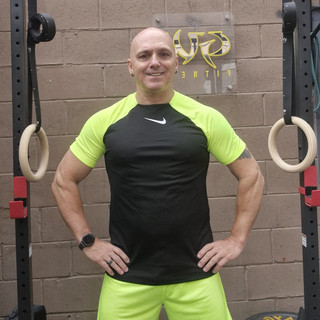
A personal question at 66 — and what the science says about muscle, strength and adaptation.

I’m 66 years old, and I train CrossFit.
Not bodybuilding. Not a traditional hypertrophy program.
CrossFit.
And that has led me to a question that I find increasingly interesting:
Can we still build muscle after 60?
We hear constantly about muscle loss as we age. Sarcopenia. Declining strength. Reduced physical capacity. The message can easily sound as if losing muscle after a certain age is simply an unavoidable downhill road.
But biology is more interesting than that.
Aging changes muscle. It doesn’t switch it off.
Muscle mass and strength tend to decline with age, particularly when physical activity decreases. But getting older doesn't mean skeletal muscle suddenly loses its ability to respond to training.
Research in adults 65 and older shows that resistance training can still produce measurable muscular hypertrophy.
A 2024 systematic review and meta-analysis of randomized controlled trials found significant increases in whole-muscle size and muscle-fiber area following resistance training in older adults. Interestingly, changes in leg lean mass were not statistically significant, suggesting that some common body composition measures may not fully capture the muscular adaptations taking place.
More recent research in adults 60 and older has also found that resistance training improves muscle mass, strength, and functional performance.
That distinction matters.
Growing older and becoming weaker are related. They are not the same thing.
Muscle still responds to a reason to adapt
Strength training creates a demand.
Lift something heavy. Push. Pull. Squat. Carry.
Repeat it consistently and progressively, recover, and the body has a reason to adapt.
That fundamental relationship between stimulus and adaptation doesn’t disappear when somebody turns 60, 65 or 70.
The magnitude and speed of adaptation may be different from those of a 25-year-old athlete. Recovery becomes increasingly important. Training needs to respect the individual, not the number printed on a birth certificate.
But the capacity to adapt is still there.
And that’s a powerful idea.
You don’t have to become a bodybuilder
Building and preserving muscle doesn’t necessarily mean pursuing bodybuilding.
Resistance can come from barbells, dumbbells, kettlebells, machines, gymnastics, and many other forms of training.
CrossFit incorporates many of those elements: squats, deadlifts, presses, pulls, carries and Olympic lifts, frequently combined with gymnastics and cardiovascular work.
The goal may be performance rather than maximizing hypertrophy, but muscles are still repeatedly being asked to produce force against resistance.
The World Health Organization recommends that adults 65 and older include muscle-strengthening activity involving the major muscle groups on two or more days each week, alongside aerobic activity. It also recommends multicomponent activity emphasizing strength and functional balance for older adults.
Because muscle isn’t only about appearance.
It’s part of the machinery that allows us to move, lift, climb, balance, train, and remain physically independent.
Training after 60 is not about pretending to be 30
This may be the part I find most interesting.
Training seriously at 66 doesn’t require denying age.
Quite the opposite.
Age provides information.
Recovery matters.
Sleep matters.
Nutrition matters.
Mobility matters.
Managing training volume matters.
Knowing when to push — and when not to push — matters.
Experience can become part of performance.
The objective isn’t necessarily to train exactly as we did decades ago.
The objective is to discover what we’re still capable of becoming now.
So, can you build muscle after 60?
The scientific evidence is encouraging:
Yes. Older muscle can still adapt to resistance training, including measurable increases in muscle size.
That doesn’t mean everyone will respond the same way. Genetics, training history, nutrition, health, recovery, program design, and consistency all influence the result.
And it certainly doesn’t mean aging disappears.
It means something much more interesting:
Age changes the rules of the game.
It doesn’t eliminate the capacity to adapt.
At 66, that’s a game I’m very interested in continuing to play.
STRONG AT 66.
Volt On. Legacy On. ⚡
Sources
de Santana DA, Scolfaro PG, Marzetti E, Cavaglieri CR. Lower extremity muscle hypertrophy in response to resistance training in older adults: Systematic review, meta-analysis, and meta-regression of randomized controlled trials. Experimental Gerontology. 2024;198:112639. DOI: 10.1016/j.exger.2024.112639.
Systematic review and meta-analysis in adults aged 60 and older. Effects of maximal versus submaximal intended velocity resistance training on muscular fitness adaptations in older adults. PubMed record reviewed September 2026.
World Health Organization. WHO Guidelines on Physical Activity and Sedentary Behavior. Recommendations for adults aged 65 years and older.


Comments