


Why I Still Compete at 65: What the CrossFit Open and Wodapalooza Taught Me
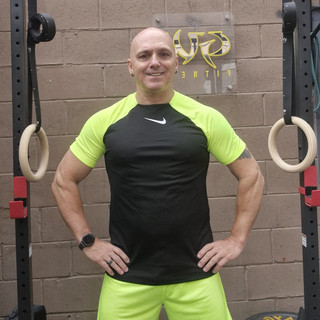

Competition isn't about proving I'm younger; it's about discovering what I’m still capable of.
At 65, I don't train to turn back the clock. I train because I want to keep moving forward. Strength, conditioning, mobility, recovery, and discipline aren't ways of pretending that age doesn't exist; they're ways of ensuring that age doesn’t dictate all my decisions. And every once in a while, training needs a test. That’s where competition comes in.
Why Compete?
The CrossFit Open has always meant something special to me. It’s not just about a leaderboard; it's an opportunity to put my training to the test and find out where I actually stand. CrossFit describes the Open as a worldwide competition for athletes of all fitness levels and abilities. In 2026, athletes completed three workouts over three weeks, using their results to assess fitness, identify strengths and weaknesses, and measure progress. That’s exactly what competition means to me.
A workout in training tells you something, but a workout with a clock, standards, a score to submit, and a leaderboard waiting at the end tells you something different. It exposes you. And I like that.
The Open: A Yearly Conversation With Myself
Every Open asks the same fundamental question:
Where am I right now?
Not where I was ten years ago, not where I think I should be, and certainly not where someone thinks a man my age should be.
The leaderboard matters because competition needs measurement. However, the number beside my name has never been the whole story. The real value lies in the information I take back into training:
This year gave me a particularly meaningful answer. In the 2026 CrossFit Open, I finished 564th worldwide in my age group—my best Open ranking since 2021—and the performance moved my CrossFit Level to 6. For me, those numbers weren't about proving anything to anyone else. They were evidence that, at 65, progress was still possible.
What held up under pressure?
What didn't?
Where did my technique break down?
Where was I stronger than I expected?
Where do I need to improve?
That result reinforced something I’ve believed for years: competition has a place in lifelong fitness. CrossFit describes the Open as a way to collect fitness data, establish or update a baseline, and track progress over time. At 65, my own data showed me exactly that. But this year, I wanted another test.

Back to Competition: Wodapalooza Mexico
I entered the Wodapalooza Mexico Online Qualifier knowing something important from the start: I wasn’t competing in a competition designed around being 65. I would be competing in the Masters 45+ category, potentially against athletes 20 years younger than me. That didn't make me feel the need to prove I was younger; it piqued my curiosity. What could I still do?
When I first looked at the workouts, there were some I genuinely wasn't sure I would attempt. But then something happened: I started doing them. One workout became two, two became three, and eventually, I completed five workouts. Not every movement was performed exactly as prescribed; I adapted where necessary, scaled intelligently, and made decisions based on what I could execute safely and meaningfully. But I showed up for every test. That, to me, matters far more than pretending an adaptation makes the effort less legitimate.
Adaptation Is Not Surrender
This may have been the biggest lesson of the entire experience: at this stage of my life, ego is a terrible coach. For one workout, 225-pound deadlifts were prescribed for Masters 45+. Could I lift 225? Yes. Was trying to accumulate 30 reps at that load within a five-minute competition window the smartest test for me? No. So I used 177 pounds instead and worked on:
30 deadlifts + 10 lateral burpees, followed by one minute of rest, then 30 lateral burpees + 10 deadlifts.
In total, that's 80 reps. That's not quitting; that’s understanding the difference between testing myself and proving something foolish. The same principle applied elsewhere: double-unders became single-unders when appropriate, and squat snatches became power snatches at a load I could manage effectively. The purpose remained intact: compete, push, learn, finish.
The Final Workout
The last test was a 20-minute AMRAP: 21-calorie row, 15 toes-to-bar, and 9 snatches. I used 77 pounds and power snatches. Twenty minutes later, I completed 2 full rounds, plus a 21-calorie row, 15 toes-to-bar, and 6 power snatches. Three snatches were all that separated me from finishing Round 3. When the clock stopped, my first reaction wasn’t frustration over those three reps; it was pride. Because the bigger score was already there: 5 out of 5. I had completed the Qualifier.
Competing Against Younger Athletes
Once the final Wodapalooza leaderboard is official, I’ll know exactly where my performances placed me in Masters 45+. Yes, I want to know. Competition without measurement isn't really competition.
At the time of writing, I sit 40th overall in the Masters 45+ division. The leaderboard remains open as athletes continue to submit their scores, so that position may still change.
But whatever number appears beside my name, it won’t change the lessons this experience has already taught me.
I can still enter the arena. I can still feel nervous before the clock starts. I can still make tactical decisions under fatigue. I can still surprise myself. And I can still finish something that initially looked intimidating. That’s the comparison that interests me most: not 65-year-old Gus against a 45-year-old athlete, but today’s Gus against yesterday’s Gus.
What Competition Gives Me
Training builds capacity, while competition reveals it. The Open has repeatedly provided me with that opportunity, and Wodapalooza offered it to me in a different way. Both experiences remind me that fitness isn’t something you possess; it’s something you practice—rep by rep, workout by workout, year after year.
Eventually, there will be things I can do today that I won’t be able to do in the future, and that’s a reality I accept. However, I refuse to surrender my abilities early just because a number dictates what someone my age is supposed to be capable of. I’ll let my body answer that question.

Strong at 65 Ends Here
This experience arrived at the perfect moment as I reach the end of “Strong at 65.” For an entire year, that phrase has represented much more than just being strong at a specific age; it has embodied consistency, purposeful training, recovery, resilience, and the commitment to show up.
I couldn’t have designed a better ending. “Strong at 65” didn’t conclude with a birthday countdown—it ended with competition. I completed five workouts, stepping in front of the clock five times, and now? While the number may change, the purpose remains the same.

Strong at 66 Begins Now.
I’m not trying to be younger. I’m focused on becoming stronger, wiser, and more capable for as long as I can. There are still workouts to complete, weaknesses to address, and competitions worth entering. And apparently, there’s still plenty within me waiting to be discovered.
Built Not Born. Volt On. Legacy On. ⚡


Comments